
When Balance or Walking No Longer Feels Automatic
Balance and gait disorders can change how secure everyday movement feels. Walking across a room may require more focus. Uneven surfaces can feel unpredictable. Turning, stopping, or changing direction may take extra effort. Many people living with balance and gait disorders in Pitt Meadows, BC look for ways to move with greater stability, confidence, and independence. Simple activities like shopping, getting out of a chair, or walking outdoors can start to feel more demanding than expected.
Some people notice subtle changes in coordination. Others feel unsteady or cautious with movement. At MeadowLife Physiotherapy and Active Rehab Center, the team understands that changes in balance and walking affect daily routines, confidence, and participation in activities that matter.
Why Addressing Balance and Walking Changes Matters
Balance and walking rely on coordination between the nervous system, muscles, joints, and vision. When one part of this system is not working as well, movement can feel less controlled. Addressing balance and gait concerns early helps support safer, more efficient movement.
Common contributors to balance and gait disorders include:
- Muscle weakness in the legs or core
- Reduced joint mobility
- Changes in sensation or coordination
- Deconditioning after illness or inactivity
- Previous injury or surgery
- Changes in posture or walking mechanics
Timely physiotherapy helps people improve stability, adapt movement strategies, and maintain confidence during daily activities.
Focused Strategies to Improve Stability and Walking
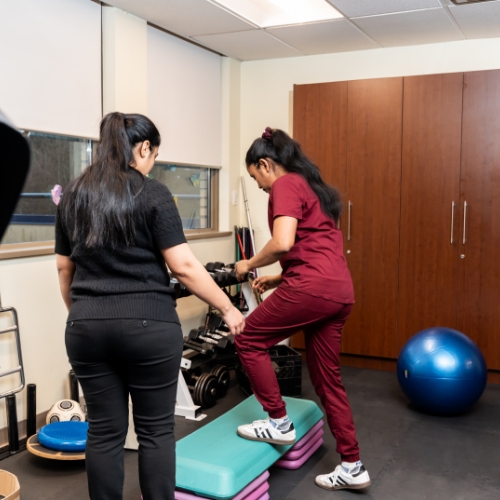
Physiotherapy at MeadowLife Physiotherapy and Active Rehab Center focuses on how the body maintains balance and coordinates walking. Care remains one-on-one and progresses as control and confidence improve.
Approaches commonly used include:
- Balance and movement assessment, which identifies factors affecting stability and walking patterns
- Strength training for the lower body, which supports joint control and steadier steps
- Gait retraining, which improves step quality, timing, and coordination
- Balance challenge exercises, which help the body respond more effectively to changes in surface or direction
- Postural control training, which supports upright alignment during standing and walking
- Functional movement practice, which improves confidence during daily tasks such as turning or stepping over obstacles
Each approach supports safer, more reliable movement.
Common Signs Associated With Balance and Gait Disorders
Balance and gait challenges can present in different ways. Common symptoms include:
- Feeling unsteady while walking
- Difficulty walking on uneven ground
- Slower or shorter steps
- Hesitation when turning or changing direction
- Reduced confidence with stairs
- Fatigue during walking
- A sense of imbalance when standing still
- Increased focus required to move safely
Recognising these signs helps guide appropriate care.
Movement-Focused Care for Steadier Walking and Balance
Balance and gait challenges often develop when the body loses coordination between strength, timing, and sensory feedback. Walking may feel less automatic, transitions may take more effort, and confidence with movement can decrease over time. At MeadowLife Physiotherapy and Active Rehab Center, care focuses on improving how the body organises movement so walking and balance feel more controlled, efficient, and reliable in everyday situations.
Physiotherapy forms the foundation of balance and gait care by assessing walking patterns, postural control, and how the nervous system responds during movement. Treatment focuses on improving strength, coordination, and balance reactions needed for standing, walking, turning, and navigating uneven surfaces. Targeted exercises and movement strategies help patients develop safer and more efficient gait patterns.
Kinesiology and active rehabilitation play a key role in reinforcing balance and walking improvements outside of physiotherapy sessions. These sessions focus on supervised gait practice, endurance training, obstacle navigation, and task-specific movement challenges. Kinesiology helps translate clinical improvements into real-world confidence during daily activities such as longer walks, community mobility, or return to exercise.
Together, these services support steadier movement, improved walking confidence, and greater independence during daily life.
Common Questions About Balance and Gait Disorders
Can balance improve even if issues have been present for a while?
Is balance training only about standing still?
How does this clinic personalize balance care?
Care Grounded in Time, Education, and Support
At MeadowLife Physiotherapy and Active Rehab Center, care prioritises understanding and steady progress. Appointments allow time for assessment, treatment, and education in one visit. Physiotherapists explain findings clearly so patients understand what affects balance and walking and how care supports improvement.
People in Pitt Meadows, BC often value the clinic’s one-on-one approach, hands-on care, and clear communication. Treatment reflects current best practice and focuses on maintaining independence, confidence, and long-term mobility.
Choosing Care That Respects Your Experience
Your Next Steps…
- Request An Appointment
- Receive A Custom Treatment Plan
- Work Hard and Progress In Your Recovery
- Recover & Enjoy Life Pain-Free